
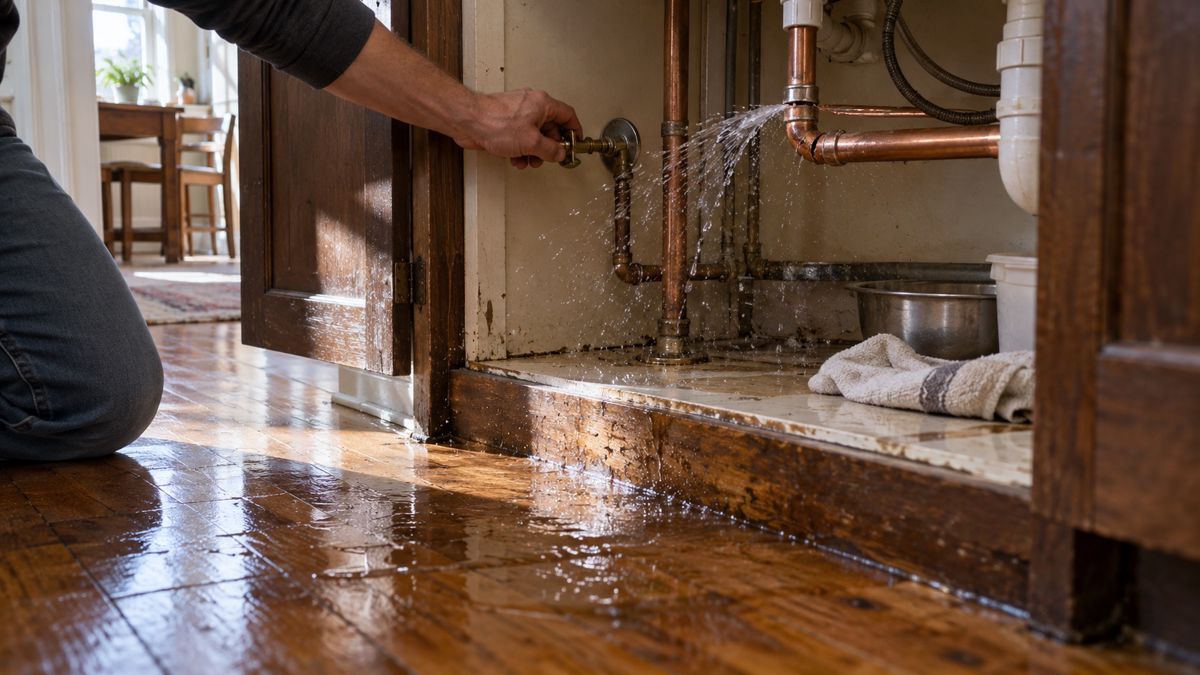
If a pipe has burst in your home, the most important thing you can do is stop the water, then make the area safe. Everything else can wait a few minutes. The steps below are written for homes in Washington, DC and nearby Northern Virginia, where older rowhouses, basements and condo buildings change how water behaves. They are general guidance, not a substitute for advice from a plumber, an electrician or your insurer.
Minutes 0 to 5: Stop the water
Find the nearest shutoff valve. A burst under a sink or behind a toilet often has its own small valve. If you cannot find one, or the water is coming from inside a wall or ceiling, turn off the main shutoff for the house.
In many rowhouses the main shutoff is in the basement near the front wall, close to where the water line enters. In a condo, the shutoff may be inside your unit, in a utility closet, or controlled by the building. If you cannot reach it, call your property manager or the building engineer right away.
There is usually a second valve at the street, near the meter. That valve generally belongs to the water utility. Do not try to operate it with tools. If the house shutoff is missing or does not work, call your water utility and explain the situation.
Once the main is off, open a faucet on the lowest level and another on the highest to drain the pipes. This takes pressure off the broken section and reduces the amount of water that keeps coming out.
Minutes 5 to 15: Stay safe around electricity
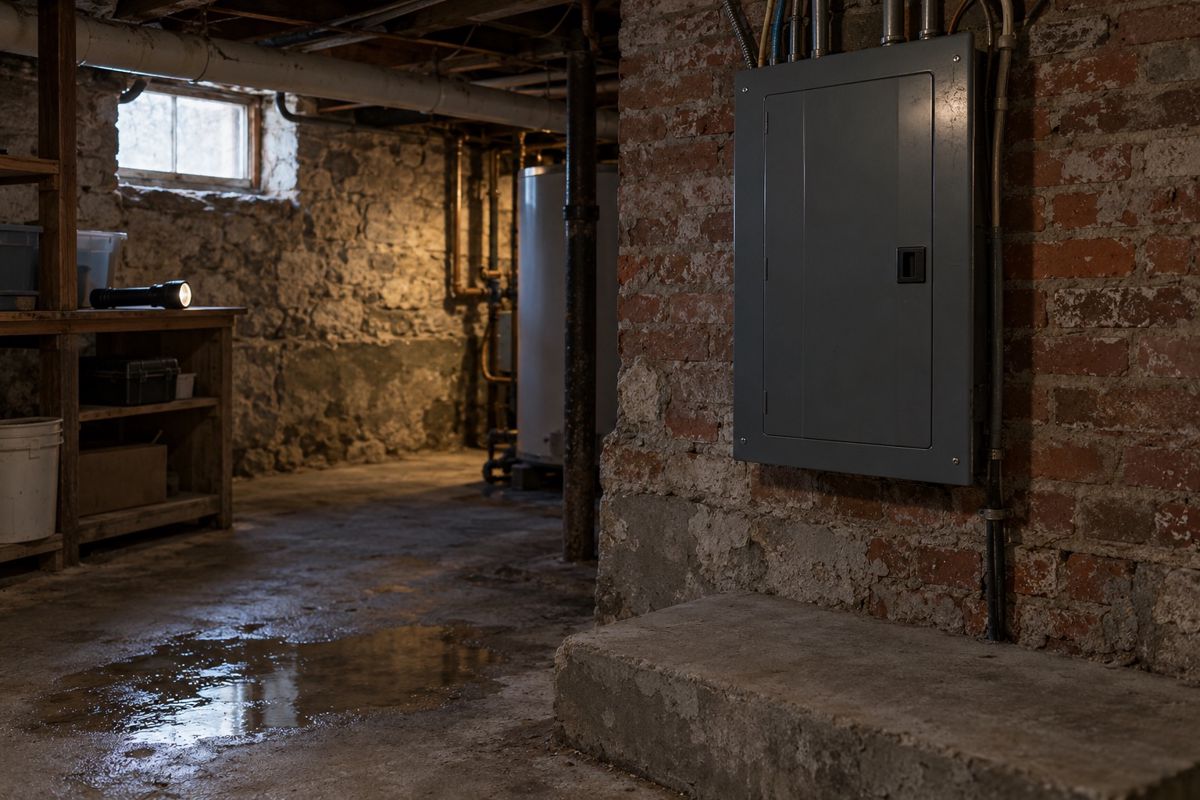
Water and electricity are a dangerous mix, so look before you step.
- If water is dripping through a ceiling light, near outlets or into the electrical panel, do not touch them.
- Turn off power at the breaker panel only if the panel is dry and you can reach it without standing in water.
- If you cannot reach the panel safely, stay out of the wet area and call an electrician or the utility.
- Never use a household vacuum or any plugged-in appliance in standing water.
- If you smell gas or hear buzzing or crackling, leave the house and call emergency services.
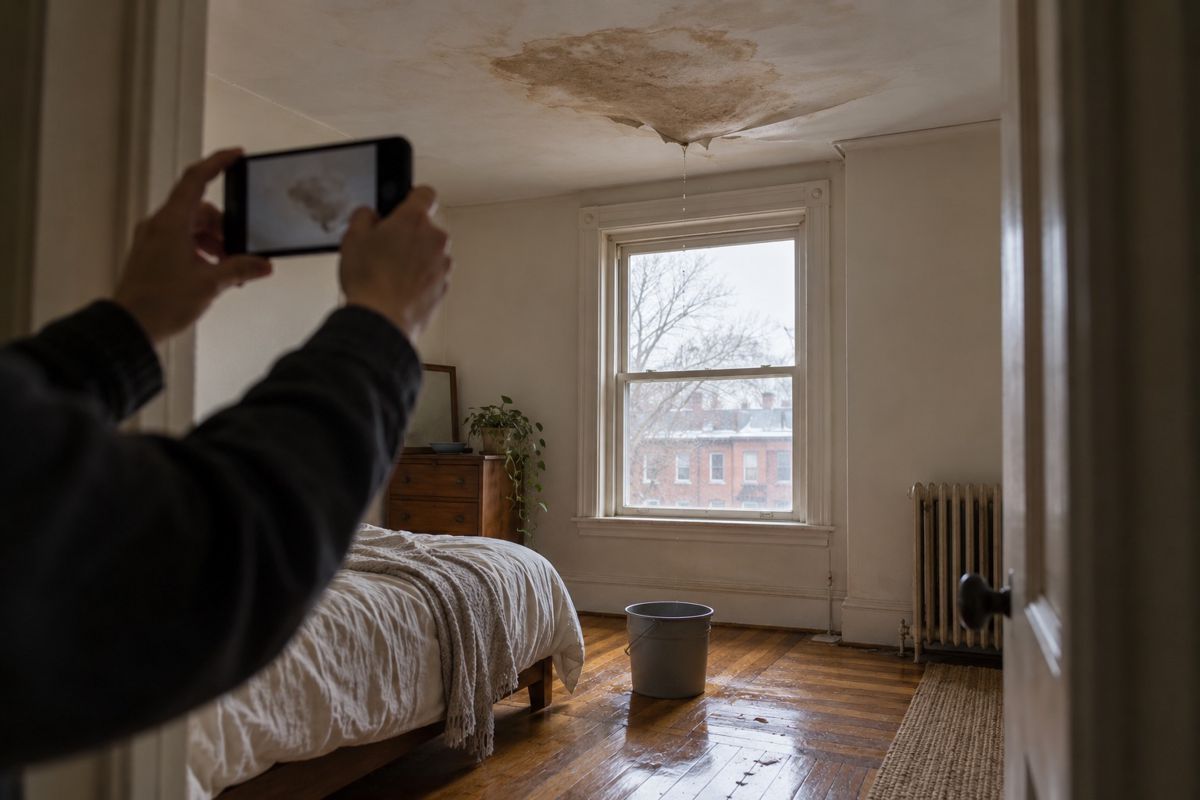
A sagging ceiling is another warning sign. Water can collect above drywall and then drop all at once. Keep people and pets out from under it.
Minutes 15 to 30: Document everything
Before you move anything, take photos and short videos. Capture the broken pipe or fitting, the water on the floors, the walls and ceiling, and any damaged furniture, flooring or electronics. Photograph the room from the doorway so the scale is clear, then take close-ups.
Write down the time you found the leak and the time you shut off the water. A simple note on your phone is fine. If you rent or live in a condo, send a message to your landlord or property manager now, so there is a timestamp showing when they were told.
Do not throw away damaged items yet. Your insurer may want to see them or at least see good photos. Keep any receipts for emergency costs such as supplies and temporary housing.
Minutes 30 to 45: Call for help and your insurer
Call a water damage crew as soon as the water is off and the area is safe. Tell them where the water came from, how long it ran, which rooms are wet and whether any water reached carpet, hardwood, drywall or a ceiling below. If the leak is in a condo, say whether neighbors may be affected.
Then call your insurer. Many standard homeowners and condo policies cover sudden and accidental pipe bursts, but the details vary. Coverage may depend on the cause, your deductible and whether you took reasonable steps to limit the damage. Flood and sewer backup are often handled differently. Ask what your policy covers, whether you need approval before work starts and which records they want.
If you live in a condo or an HOA community, check whether the pipe is part of your unit or part of the building. The association and the unit owner often insure different things, and the split depends on your bylaws. Ask the board or manager for the rules on contractors, such as approved hours, elevator use and proof of insurance.
Minutes 45 to 60: Start limiting the damage
While you wait, do what you safely can.
- Move small items, rugs, shoes, books and electronics out of the wet area.
- Place aluminum foil or plastic under furniture legs on wet carpet to avoid stains.
- Mop or blot up shallow water, but do not use fans yet if the water could be contaminated.
- Open interior doors and cabinets so air can move, unless it is very humid outside.
- If a ceiling is bulging with water, a small hole made by a trained person can release the water in a controlled way. Do not do this near light fixtures or wiring.
Leave heavy furniture and large appliances where they are unless you can move them safely. The goal is to protect your belongings and yourself, not to finish the cleanup on your own.
Why the first hour matters in Washington homes
The first hour matters because water does not stay where it lands. In a brick rowhouse, it can run along joists, soak into plaster and drip into the basement. In a condo, it may travel down through floors and into a neighbor's ceiling. Wood floors can begin to cup, and drywall can start to swell.
The local climate adds pressure. Washington summers are humid, so wet materials dry slowly, and general guidance is that things should be dried within a day or two to avoid mold. In winter, a hard freeze can split a pipe in an outside wall, and the real leak often starts when it thaws. Knowing that helps you check exterior walls, unheated spaces and kitchens on cold mornings.
Another detail worth knowing is that many District homes are older, with mixed plumbing that has been changed over the decades. If one pipe has burst, ask a plumber to check others of the same age and type. A single failure can be a sign that the rest of a line is worn.
What happens after the first hour?
Once the water is off and help is on the way, the work moves into three stages. First, standing water is removed with pumps and extractors. Second, the building is dried with air movers and dehumidifiers, with moisture readings to show when materials are back to normal. Third, anything that cannot be saved is removed, and repairs begin.
If your problem is a flood in a lower level, our guide to flooded basement cleanup explains what to expect. If the water is already standing on your floors, start with emergency water extraction. After that, structural drying shows how hidden moisture is handled.
Ready to get help?
A burst pipe is stressful, but the first hour is manageable if you take it one step at a time. Stop the water, stay safe, document, call and limit the damage. If you are in Washington, DC or nearby Northern Virginia and need help with wet floors, walls or a ceiling, see our page on emergency water extraction in Washington or go to the home page to learn how we work.