Skip to content
Open 24/7Free inspection
Call now (703) 555-0179

Water extraction in DC and NoVA

Emergency water extraction in Washington, DC

Standing water gets into walls and floors fast. Call and tell us what happened and we will explain the next step.

(703) 555-0179 Call now
  • Pumps and extractors for floors and carpet
  • Safety check before work starts
  • Moisture readings and photos for your records
Free damage assessment
What kind of damage?

Is water still coming in?

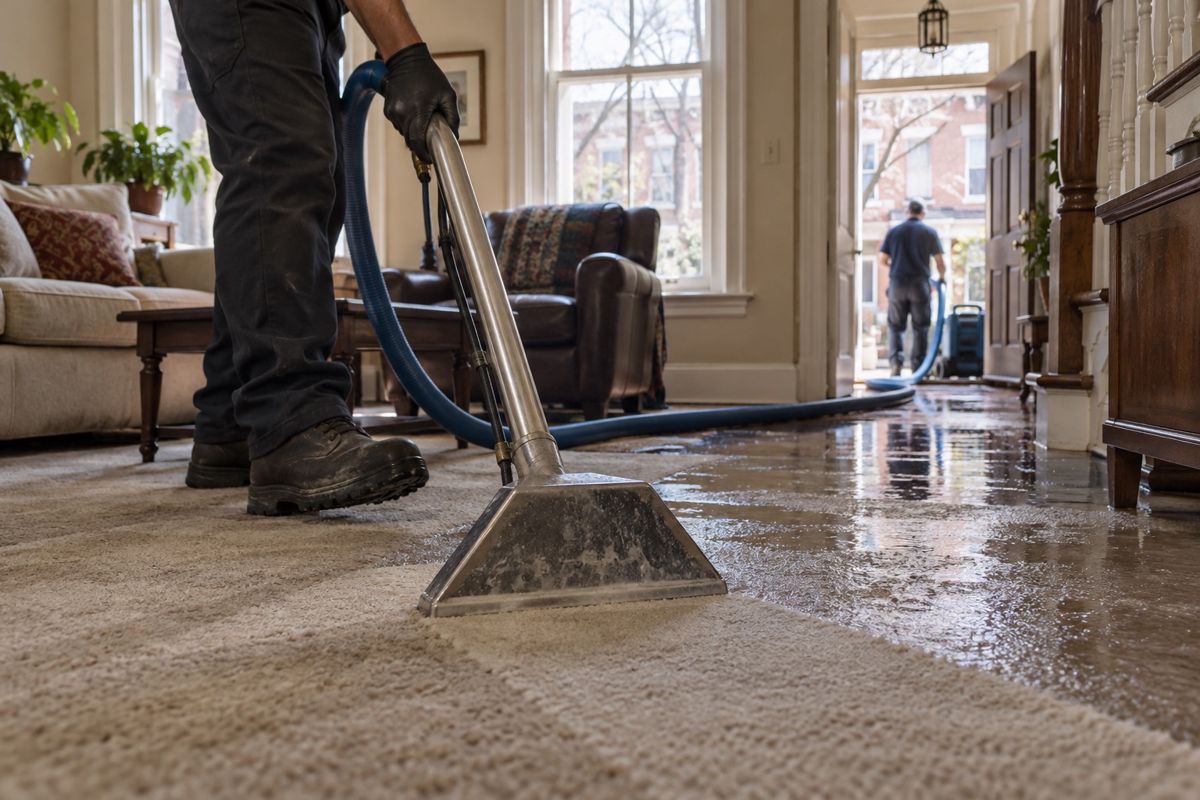
Extractor wand removing standing water from living room carpet

What is emergency water extraction and when do you need it?

Emergency water extraction is the removal of standing water from a home or building as quickly and safely as possible. For deep water, crews use pumps. For shallow water, they use wet vacuums. After that, extractors pull water out of carpet, padding and other soft materials. The reason for speed is simple. The longer water sits, the further it travels into drywall, subfloors, insulation and furniture.

You need it after a burst supply line, a failed water heater, an overflowing washing machine, a roof leak during a summer thunderstorm or any event that leaves water on the floor. In a rowhouse or condo, water also moves sideways and downward into neighboring spaces, which makes quick action more important.

Extraction is the first stage, not the last. It is normally followed by structural drying and dehumidification, because a floor can look dry while the materials underneath are still wet.

What should I do before the crew arrives?

A few safe steps can limit the damage. Only do what you can do without putting yourself at risk.

  • Stop the water at its source if you can. Look for a shutoff valve under the sink, behind the toilet or at the water heater, or the main shutoff for the house.
  • If water is near outlets, appliances or the electrical panel, stay away and turn off power at the breaker only if the panel and the floor around it are dry.
  • Take photos and short videos of the water, the source and the damaged items before anything is moved.
  • Lift small items, rugs and electronics out of the water. Do not try to move heavy furniture on wet carpet.
  • Open your insurance policy and note the claims number. If you live in a condo, notify your property manager.

Never walk through water that may be contaminated. If the water came from a toilet or a sewer line, read about sewage backup cleanup first.

What causes water emergencies in Washington, DC homes?

Many homes in the District are older brick rowhouses with plumbing that has been repaired, rerouted or replaced in stages. Aging supply lines, corroded fittings and old water heaters fail without much warning. Kitchens and baths on outside walls can freeze during a hard winter cold snap, and a split pipe may only show itself after the thaw.

Summers bring a different problem. Heavy thunderstorms and the remnants of tropical systems can overload gutters and drains, and water finds its way into basements and ground-floor units. In condo buildings, a leak in one unit often becomes a problem in the unit below it.

If your problem is below grade, our page on flooded basement cleanup covers storm seepage and sump pump failures in more detail.

We do not quote a price over the phone because the job depends on what we find. These are the main factors.

  • Depth and area. A wet kitchen floor and a fully flooded level are very different jobs.
  • Type of water. Clean supply water is simpler than gray water or sewage, which need protective gear and sanitizing.
  • Materials. Carpet and padding, hardwood, tile, engineered floors and drywall all react differently to water.
  • Access. Basement stairs, upper floor condo units, long hose runs and limited parking all add time.
  • Follow-on work. Extraction alone costs less than extraction plus drying and cleanup.

We give you a written quote before we start, and we explain anything that could change it.

How long does it take and what happens on the day?

Removing the water from a typical room often takes a few hours. A full basement or a large unit can take longer. The time depends on depth, access and how much water has soaked into materials.

On the day, the crew walks the space with you, checks for safety issues and finds the water path. They take moisture readings, set up pumps or extractors and remove the water. Carpet padding and soaked insulation that cannot be saved are usually taken out at this stage. Then the crew explains what drying is needed and sets up equipment if you approve it.

When should you call? Call when there is standing water, when a ceiling is sagging or dripping, or when a floor stays wet after you have mopped. If you are unsure, call anyway. A short conversation costs nothing, and you can read more about us on the home page.

How it works

  1. Call for help

    Tell us what happened and whether water is still coming in.

  2. Crew arrives

    We stop the source, extract water and set up drying.

  3. Restored

    Documentation for your insurer at every step.

  • Open 24/7
  • Free inspection
  • Insurance claim help
  • Certified

Request water extraction

Tell us what you need and we call you back.

No obligation.

What kind of damage?

Is water still coming in?

Questions about water damage restoration in Washington

Can I use a wet vacuum from the hardware store myself?

For a small spill, yes. For anything more, a household wet vacuum removes only a fraction of the water, and it does nothing for water inside walls or under flooring. It also gives a false sense that the problem is solved. If water reached carpet, padding, cabinets or drywall, professional extraction and drying equipment is the safer choice. Never use a wet vacuum near live electrical hazards.

Is extracted water always clean water?

No. Water from a supply line is usually the cleanest category, but it can pick up dirt and bacteria from floors and building materials as it spreads. Water from a washing machine or dishwasher is dirtier. Water from a toilet, a sewer line or a river or storm flood is considered contaminated. The category affects what can be saved and what protective steps are needed.

Will insurance pay for emergency extraction?

Often a sudden and accidental event, such as a burst pipe, is covered under a standard homeowners or condo owner policy, though terms and deductibles differ. Flood and sewer backup may need separate coverage. Call your insurer and ask. Keep photos, receipts and any written records from the crew. We can provide moisture readings and a written scope to support your claim.

Do I need to leave the house during extraction?

Not always. For a small, clean-water job, you may be able to stay in other parts of the home. If the water is contaminated, if the power is off in the work area or if equipment will run through the night, many people choose to stay elsewhere. We tell you what is safe for your situation, including pets and children.

What if the water came from my upstairs neighbor?

Document the damage, tell your property manager or board right away and call your insurer. Responsibility depends on the source and your building's rules, and it is often settled between the associations and insurers. You can still start extraction to protect your unit. Write down what was removed and take photos so the record is clear.

Ready when you are Call now or request a quote online. Call now Free damage assessment (703) 555-0179

Free damage assessment