Skip to content
Open 24/7Free inspection
Call now (703) 555-0179

Drying and dehumidification in DC

Structural drying services in Washington, DC

A floor that feels dry can still hold water in the layers below. Proper drying protects walls, floors and framing.

(703) 555-0179 Call now
  • Air movers and dehumidifiers matched to the space
  • Moisture readings at the start and end
  • A written record for insurers and condo boards
Free damage assessment
What kind of damage?

Is water still coming in?

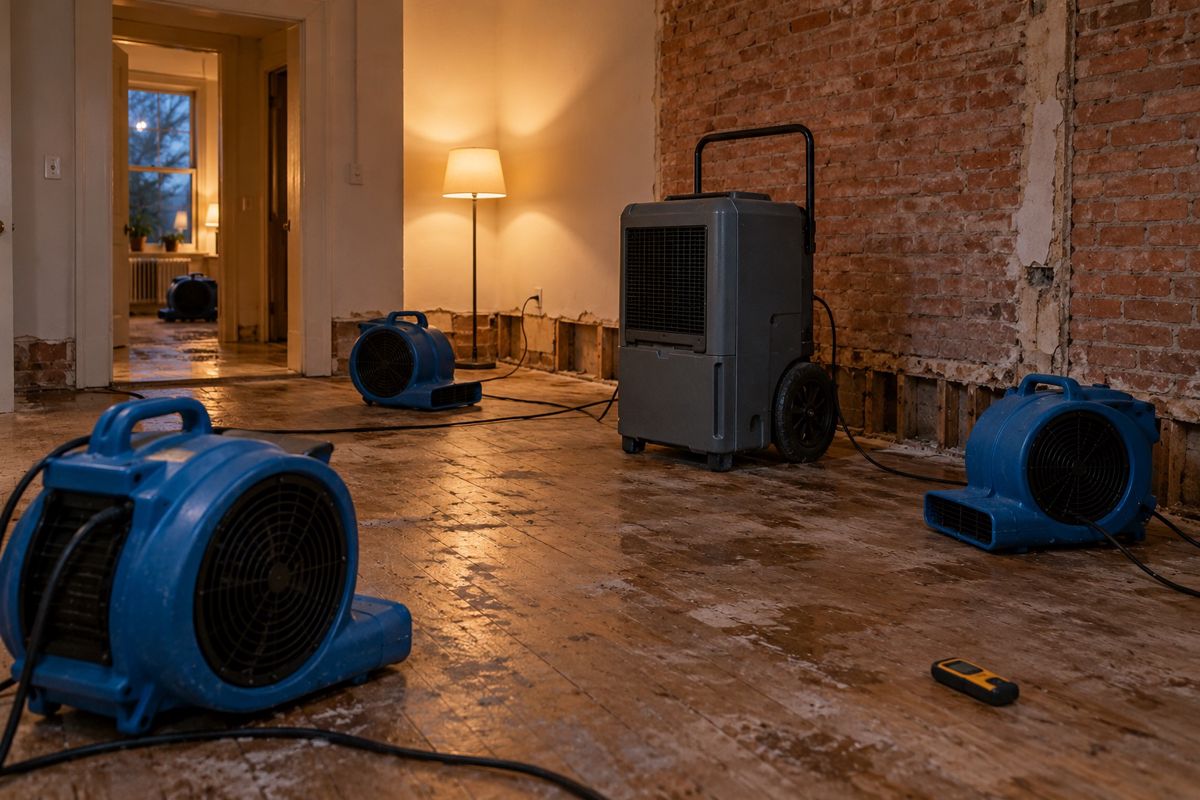
Air movers and dehumidifier drying a room with exposed brick wall

What are structural drying services?

Structural drying is the controlled removal of moisture from the parts of a building that got wet: drywall, plaster, subfloors, wall cavities, framing, insulation and flooring. It is more than putting a fan in a room. A crew measures moisture, builds a drying plan, sets up air movers and dehumidifiers and checks progress until the materials return to normal levels.

Drying usually follows emergency water extraction, but it also matters after slow leaks, roof leaks and storm seepage where there is no standing water to remove. Without proper drying, hidden moisture can warp floors, loosen finishes, create odors and lead to mold.

Why does drying matter so much in a humid climate?

Washington summers are warm and damp. When outdoor air is already full of moisture, wet materials dry slowly on their own, and some do not dry at all. Opening windows can even make a damp basement worse on a muggy day.

That is why professional drying relies on a closed, controlled space. Dehumidifiers pull moisture out of the air, and air movers push dry air across wet surfaces so more moisture can evaporate. The equipment works as a system. Too many fans without enough dehumidification just moves damp air around.

Older rowhouses add their own challenges. Plaster walls, layered floors and brick party walls hold moisture for a long time, so we measure at several points instead of trusting what the surface feels like.

What changes the cost and the drying time?

We cannot give a fair figure until we see the space. These factors have the most effect.

  • Size of the wet area. More wet surface means more equipment.
  • Materials. Hardwood, plaster and dense framing dry slower than carpet or drywall.
  • How long it was wet. Water that sat for days is harder to remove than water addressed the same day.
  • Humidity and ventilation. Muggy weather and sealed rooms change the plan.
  • Hidden moisture. Wet insulation or framing behind finished walls can add steps.

Equipment runs on a schedule, so the cost also reflects how many days the job needs. We explain the plan and put it in writing before we begin.

Many jobs take a few days, and larger or more complicated ones take longer. The honest answer is that readings decide it, not the calendar. We check moisture levels on a regular basis, move equipment as areas dry and stop only when the materials reach a normal range for your building.

During drying, equipment will be noisy and will raise the temperature in the room. You will need to keep the doors and windows in the work area closed, and you should not move or unplug the equipment. If something seems wrong, call us.

Large wet areas in a basement may overlap with a flooded basement cleanup, and we plan both together so you are not paying twice for the same visit.

What should I expect on the day, and when should I call?

On setup day, the crew inspects the area, records moisture readings and takes photos. They may remove baseboards, drill small holes or lift sections of flooring or drywall to dry cavities. Then they place and test equipment and explain the schedule.

On later visits, they take new readings, adjust equipment and tell you how close the structure is to dry. On the final visit, they confirm the readings, remove equipment and give you the record.

Call when a leak has soaked walls or floors, when a room smells musty after water exposure or when a floor is cupping or swelling. If you are filing a claim, a dry-out record helps. See our water damage restoration overview for how the full process fits together.

How it works

  1. Call for help

    Tell us what happened and whether water is still coming in.

  2. Crew arrives

    We stop the source, extract water and set up drying.

  3. Restored

    Documentation for your insurer at every step.

  • Open 24/7
  • Free inspection
  • Insurance claim help
  • Certified

Request structural drying

Tell us what you need and we call you back.

No obligation.

What kind of damage?

Is water still coming in?

Questions about water damage restoration in Washington

Can I just run fans and a dehumidifier from the store?

For a small, shallow spill caught right away, that may be enough. For wet walls, subfloors or a basement, household equipment usually cannot move enough air or remove enough moisture. You also cannot see moisture inside walls without meters. If you try it yourself, keep checking and watch for musty smells, warped floors or staining. When in doubt, ask for a moisture reading.

Will you have to cut into my walls or floors?

Sometimes. If readings show wet insulation or framing behind a wall, a small opening may be needed to dry it. We try to keep openings small and tell you before we make them. Soaked drywall, insulation and padding that cannot be dried are often removed. Anything we cut or remove is documented with photos.

How do I know the building is actually dry?

Moisture readings tell you. We compare readings from wet areas against dry areas of the same material in your home. When the wet areas come down to a normal range, drying is finished. We share the readings and photos so you can see the numbers, not just hear a verbal assurance.

Is the equipment loud, and what does it do to my power bill?

It is loud enough that most people notice it, especially at night, and it uses electricity. Several fans and dehumidifiers can add noticeably to a power bill for the days they run. Ask us about it up front, and ask your insurer whether the extra electricity is part of the claim.

Does drying prevent mold?

It greatly lowers the risk. Mold needs moisture, and general guidance is that materials should be dried within a day or two of getting wet. If water has been present longer, or if you can see or smell mold, drying alone may not be enough. In that case, see our page on mold remediation.

Ready when you are Call now or request a quote online. Call now Free damage assessment (703) 555-0179

Free damage assessment